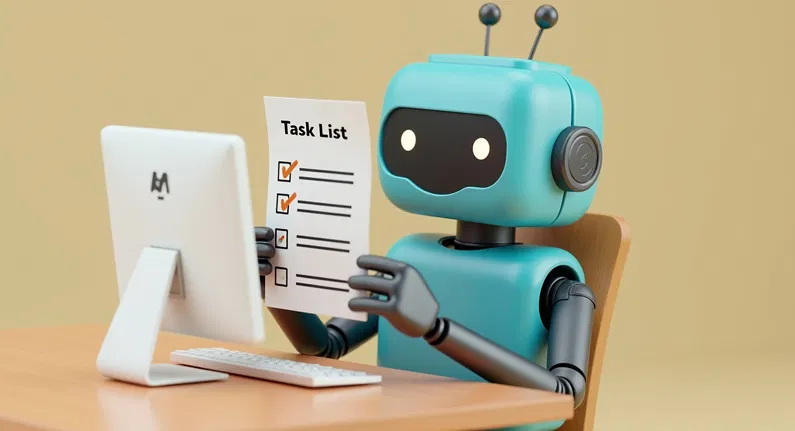
How an AI Agent Simplifies Daily Work for Growing Teams

Summarize this article with


As teams grow, so does the number of tools, tasks, and handoffs. What once felt manageable quickly turns into scattered workflows, manual follow-ups, and constant context switching.
This is where an AI agent makes a real difference.
Instead of replacing your tools, an AI agent connects them. It understands how your workflows operate and takes care of routine tasks in the background—so your team can focus on meaningful work.
From Busywork to Focused Execution
Daily operations are filled with small but time-consuming actions: updating records, sending follow-ups, preparing summaries, and tracking progress across tools. When handled manually, these tasks slow teams down.
An AI agent automates these actions across your connected apps. It ensures information flows smoothly, tasks are completed on time, and nothing gets lost between systems.
A simple example
Imagine a new lead books a meeting. Instead of manually handling everything, your AI agent can coordinate the process automatically:
on NewMeetingBooked:
  1. fetch lead details
  2. update CRM record
  3. generate meeting summary template
  4. notify sales team in Slack
With one workflow, multiple tools stay in sync—without extra effort.
One Agent, Many Tools
Modern teams use email, chat, documents, calendars, and CRMs every day. An AI agent acts as the central layer that connects these tools and shares context between them.
For example:
if email contains "pricing request":
  1. draft response using AI
  2. log interaction in CRM
  3. create follow-up task
The agent doesn't just automate tasks—it understands when and why to act.
Designed to Learn and Improve
An AI agent isn't a rigid rule engine. Teams can review actions, refine workflows, and improve results over time.
if user edits AI response:
  1. learn preferred tone
  2. apply feedback to future drafts
This makes automation smarter and more aligned with how your team actually works.
A Smarter Way to Scale
Scaling isn't about adding more tools—it's about reducing friction. An AI agent helps teams stay aligned, move faster, and operate with clarity as complexity increases.
By handling routine work automatically, the AI agent gives teams space to focus on strategy, creativity, and growth.
Conclusion
An AI agent simplifies daily work by connecting tools, automating routine tasks, and keeping workflows moving without constant oversight. As teams grow and operations become more complex, having a single intelligent layer to manage that complexity makes all the difference.
With the right AI agent in place, scaling feels smoother, faster, and far more manageable.